THE PROBLEM
A DIFFERENT QUESTION
Foundational tools and the managed services that operationalize them remain necessary. The problem isn't technology selection. It's that each capability measures a slice of risk in isolation, producing independent metrics, dashboards, and alerts. USPM is the operating layer that connects them into a single coherent view.
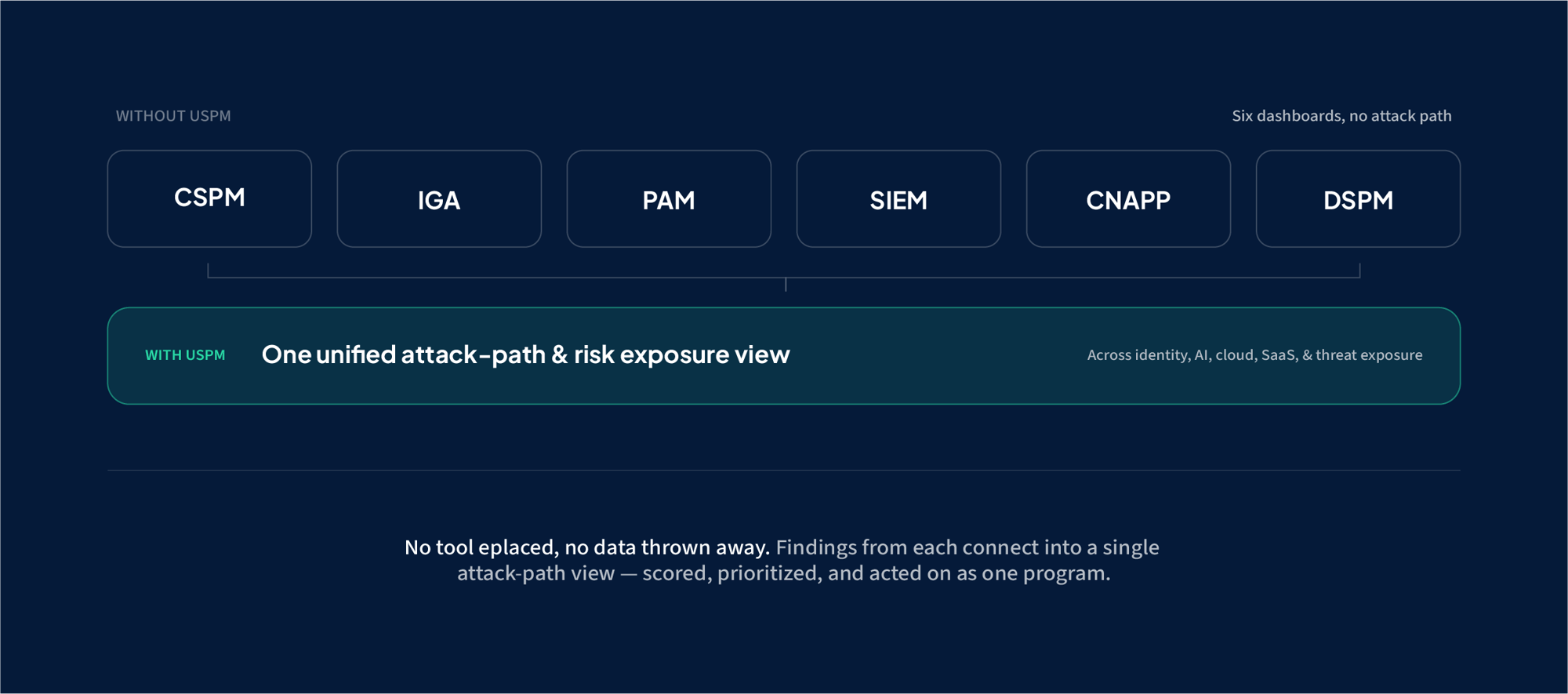
Risk discussed in the same terms across technical and executive audiences — no translation between tool dashboards.
Findings from identity, AI, cloud, and threat exposure connect into single attack paths — because real risks don't respect tool boundaries.
A single prioritization engine connecting posture findings to remediation, detection, governance, and investment — not six independent backlogs.
PILLAR 01
"Who can act — and should they be able to?"
Identity is the primary attack vector in modern breaches. IDPM governs the full lifecycle of every identity — human, machine, non-human, and AI agent — continuously mapping access rights, detecting behavioral anomalies, and ensuring what any identity can do reflects what it should. The foundation every other domain builds on.
PILLAR 02
"What AI systems exist, what can they do, and are they governed?"
Shadow AI tools accumulate across SaaS environments with no inventory and no oversight. AI agents at with delegated authority at machine speed — their permission scope often exceeding any individual human user, their blast radius unlike anything a traditional security program was designed to contain. AISPM discovers, assesses, and continuously governs both.
PILLAR 03
"What exists across our environment — and is it configured correctly?"
Cloud environments, SaaS platforms, and data stores drift from their secure baseline constantly — every new integration, permission change, and onboarded application creates new exposure. Most organizations only discover how far they've drifted during an incident or an audit. CSDPM detects configuration drift continuously, enforces policy across the full enterprise surface, and closes gaps before they become the entry points attackers rely on.
PILLAR 04
"What can an attacker actually exploit — and what are we doing about it?"
Id Every security program generates findings. Most generate more than they can act on. TEM applies an attacker-relevant lens to that problem — mapping real attack paths across your environment, scoring exploitability against actual threat behavior, and translating the full exposure picture into a prioritized remediation program that leadership can measure and the board can understand.
How Digital Hands operationalizes USPM and your path to better security — at every level
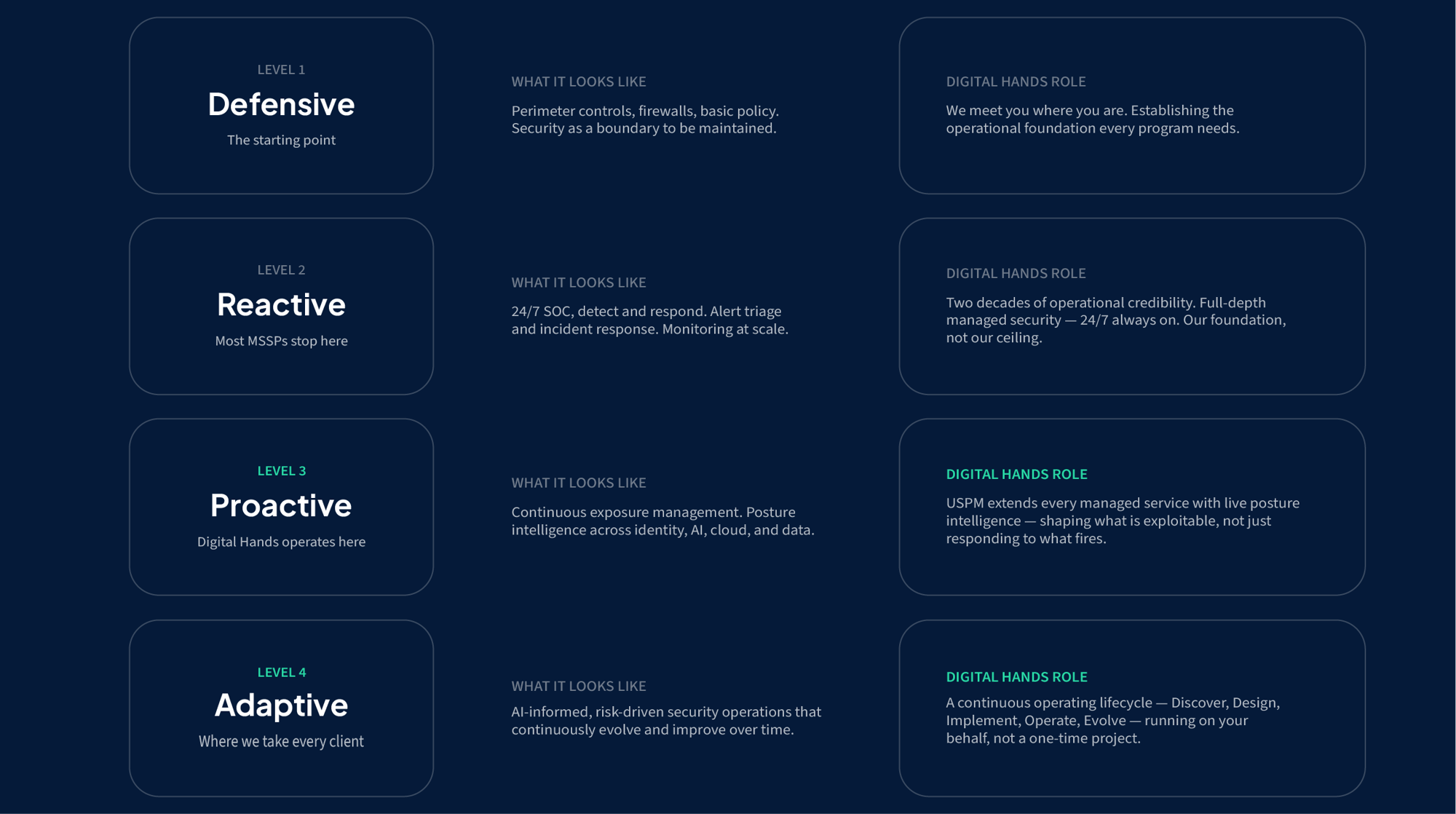
Digital Hands is the operational partner at every stage — not a consultant who exits after the roadmap is delivered

THE USPM OPERATING PRINCIPLES